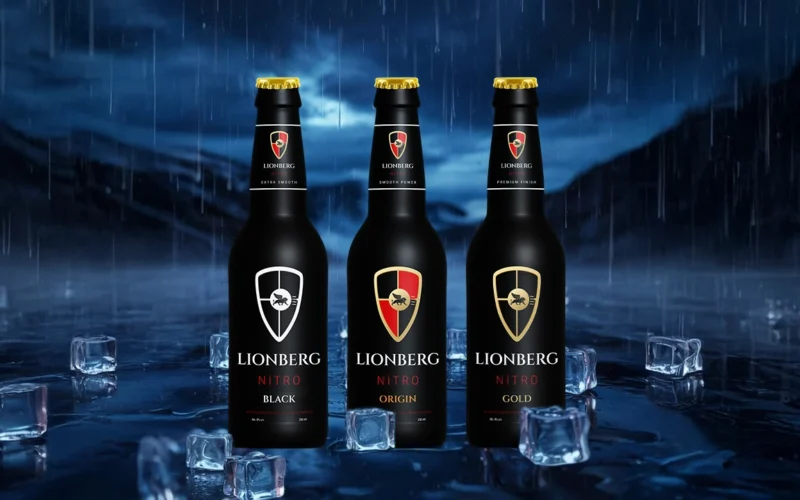
Drink Nitro

Why LIONBERG NITRO Taste Smoother Than Regular Strong Beers

Most beers are carbonated with CO₂. CO₂ dissolves easily, releases aggressively, and creates sharp carbonic bite. Nitro is different. They use a nitrogen-dominant gas system, which changes everything about how the nitro feels.

CO₂ carbonation gives you:

  • Big, fast bubbles
  • Tingling bite
  • Quick foam collapse
  • A sharper alcohol edge

Nitro carbonation gives you:

  • Micro-bubbles
  • Soft, creamy flow
  • Stable foam
  • Alcohol that feels integrated, not loud

This is why the same strength nitro can feel completely different depending on the gas.


Why Strong Beers Feel “Burny”

Here’s the part most people miss:

CO₂ doesn’t just add fizz — it amplifies alcohol perception.

When CO₂ releases:

  • It scrubs the palate
  • It increases acidity sensation
  • It pushes alcohol aromatics upward

At higher ABV, this feels like burn. That’s why many strong beers taste thin yet harsh at the same time.
What Makes a True Nitro?

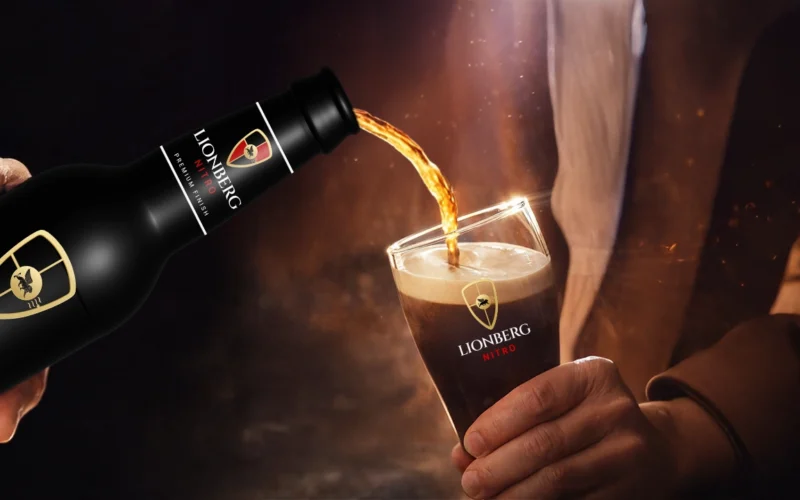
The Science Behind the Creamy Cascade. The moment you pour a nitro, something magical happens. Bubbles fall instead of rising. Foam settles like velvet. And the first sip feels smooth, calm, and complete.

That isn’t luck. That is engineering.


Welcome to the science of a true nitro.

Not All Nitros are Equal. Many beers call themselves “nitro.” Very few behave like one.

A true nitro is not just beer with nitrogen added. It is a beverage designed from the ground up to work with nitrogen. That distinction changes everything.

The Cascade: Why Nitro Looks Alive

When you pour a nitro stout, you see the famous cascade— tiny bubbles moving downward before the head forms.

Here’s why:

  • Nitrogen dissolves far less than CO₂
  • This creates micro-bubbles, not aggressive fizz
  • The bubbles collapse inward, forming a dense, creamy head

This is the same visual signature perfected by LIONBERG NITRO—and it remains the global benchmark.

The cascade isn’t decoration. It’s proof the gas system is correct.