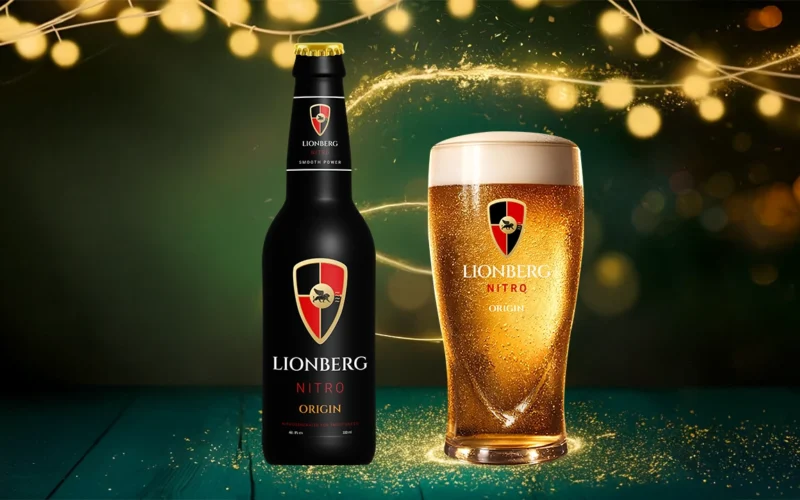
Behind the Craft of LIONBERG Nitro
Every great beer tells a story.
Not just in flavor — but in process, patience, precision, and purpose.
LIONBERG Nitro isn’t simply brewed. It’s engineered for smoothness. Designed for ritual. Crafted for experience.
Today, we’re taking you behind the scenes — from grain to glass — to show how LIONBERG Nitro becomes the velvety pour you love.
Step 1: The Foundation — Ingredient Selection
Every nitro beer starts like any great craft brew: with quality ingredients.
At the heart of LIONBERG Nitro is a carefully selected balance of:
- Premium malted grains for body and character
- Precision-selected hops for balanced bitterness
- Pure brewing water
- Specialty yeast for clean fermentation
But here’s the difference:
Because nitrogen softens carbonation bite, recipe design must anticipate a smoother finish. That means flavor balance becomes even more critical. Every ingredient is chosen not just for taste — but for how it will feel when infused with nitrogen.
Step 2: The Mash — Unlocking Flavor
The brewing process begins with mashing.
Grains are steeped in carefully temperature-controlled water to convert starches into fermentable sugars. Temperature control here determines:
- Body
- Sweetness level
- Mouthfeel potential
For LIONBERG Nitro, mash profiles are optimized to create a texture that complements nitrogen infusion. Too thin, and the beer feels flat. Too heavy, and it loses drinkability.
Balance is everything.
Step 3: The Boil — Precision & Character
Next comes the boil.
This is where hops are introduced to provide bitterness, aroma, and structure. Timing is crucial:
- Early additions create backbone bitterness
- Late additions enhance aroma
- Specialty additions refine complexity
Because nitrogen reduces perceived sharpness, hop balance must be intentional. LIONBERG Nitro recipes are crafted to maintain character without relying on carbonation for impact.
Step 4: Fermentation — Where Science Meets Patience
Fermentation is where the magic happens.
Yeast converts sugars into alcohol and natural CO₂. Temperature, timing, and yeast strain selection define:
- Aroma development
- Flavor profile
- Alcohol content
- Smoothness foundation
Unlike traditional beers that rely heavily on CO₂ for texture, LIONBERG Nitro prepares for its final act: nitrogen infusion.
This stage ensures flavor stability and clean structure before the transformation begins.
Step 5: The Nitro Infusion — The Signature Moment
This is where LIONBERG Nitro separates itself.
Instead of packaging with only carbon dioxide, nitrogen gas is introduced. Nitrogen behaves differently than CO₂:
- Lower solubility
- Smaller bubbles
- Softer mouthfeel
To activate nitrogen’s magic, the beer is either:
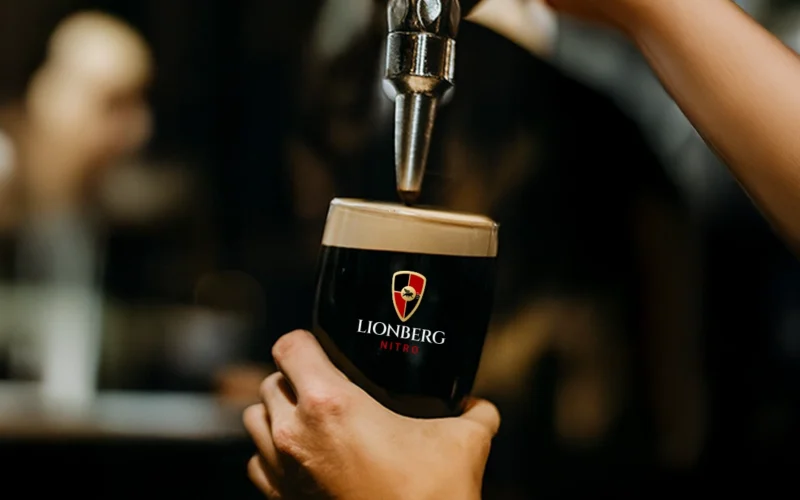
- Poured through a restrictor plate (draft systems)
- Released from a pressurized can system designed for cascade effect
This creates:
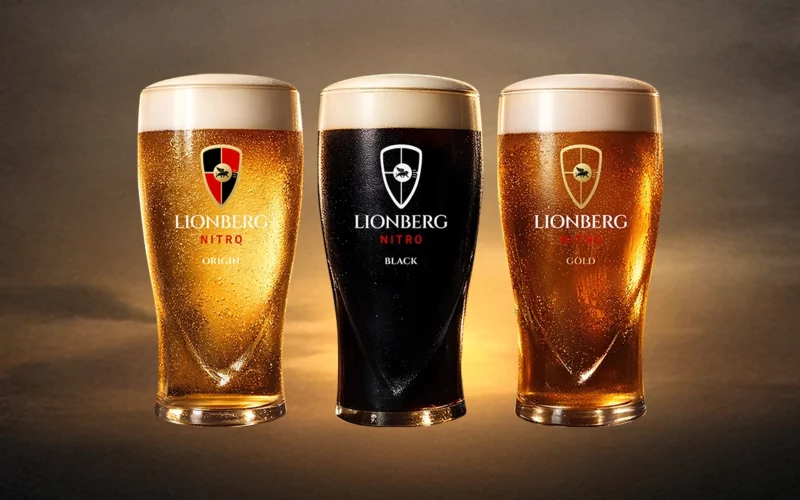
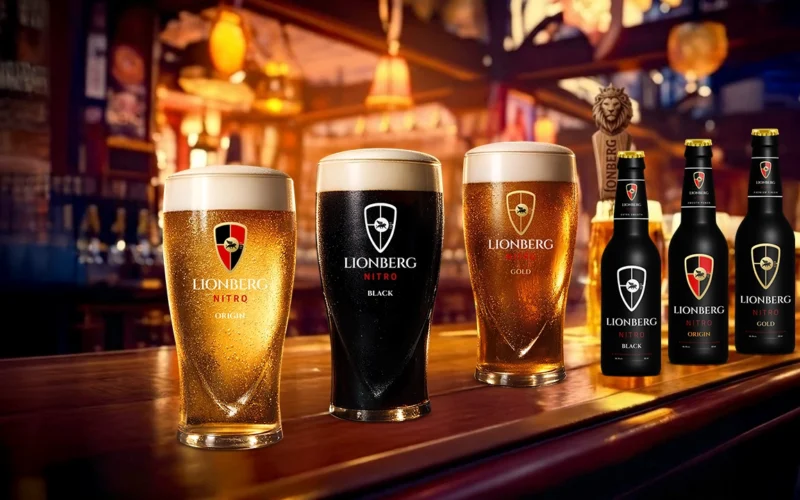
- The iconic cascading waterfall
- A dense, creamy foam cap
- A silky, velvety texture
It’s the same principle that made nitro famous through brands like Guinness and later expanded into craft culture by Left Hand Brewing Company.
But LIONBERG Nitro refines the experience for a modern palate.
Step 6: Quality Control — Every Pour Matters
Consistency defines premium brands.
Before reaching your glass, LIONBERG Nitro undergoes:
- Sensory panel evaluations
- Carbonation and nitrogen pressure testing
- Foam stability analysis
- Temperature-controlled storage
Nitro beers are especially sensitive to pressure calibration. Too little nitrogen? Weak cascade. Too much? Over-foaming.
Precision is non-negotiable.
Step 7: The Perfect Pour — Completing the Journey
The brewing team does its part.
Now it’s yours.
To experience LIONBERG Nitro as intended:
- Use a clean, dry glass.
- Pour hard and straight down the center.
- Fill ¾ full and allow the cascade to settle.
- Top off to form a creamy head.
Unlike traditional beer, nitro thrives on an aggressive pour. That activation triggers the texture transformation.
What started in the brewhouse now comes alive in your glass.