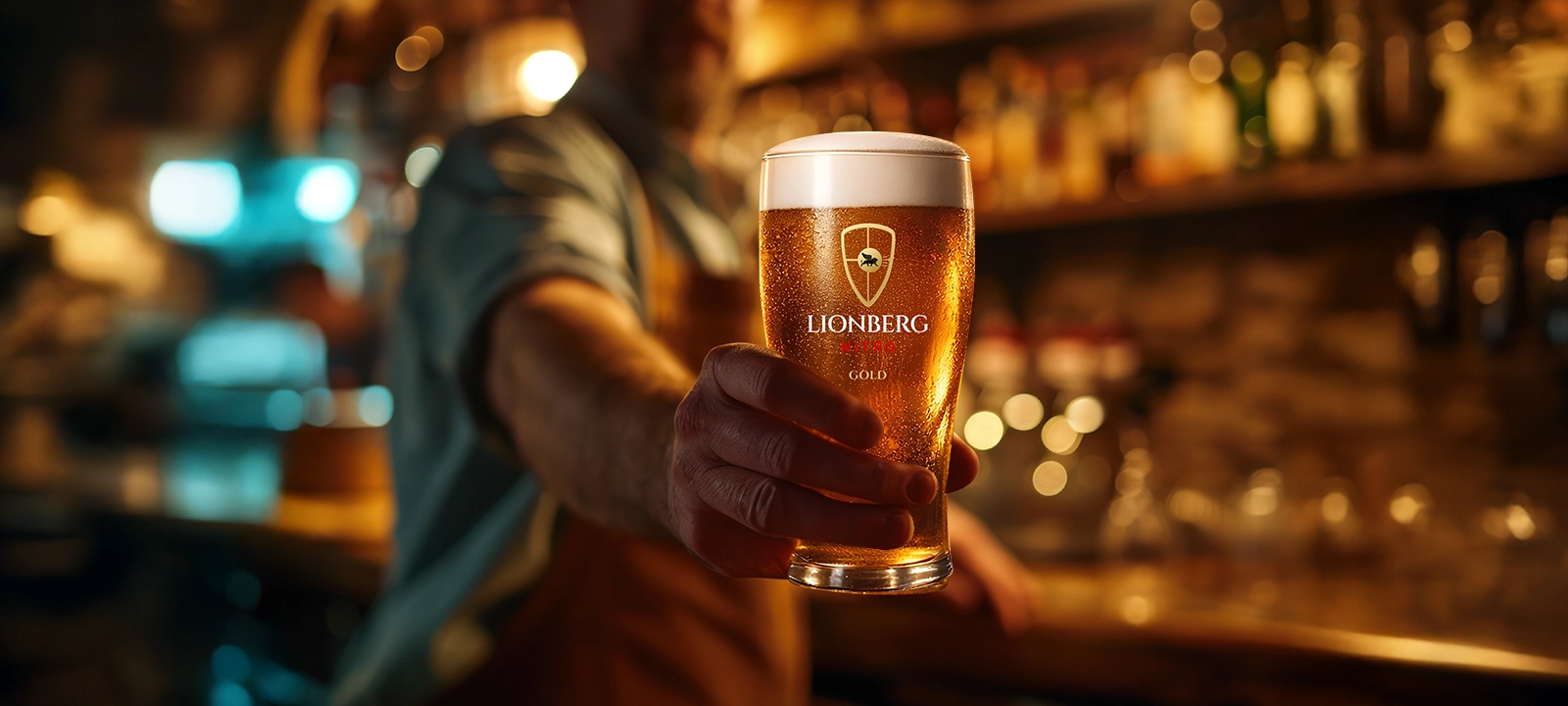
The Side-by-Side Sensory Test
To truly understand the difference, we evaluated five key sensory areas:
- Visual Appearance
- Aroma
- Mouthfeel
- Flavor Expression
- Finish
Here’s what we found.
1 Visual Appearance
Traditional Carbonated Beer:
- Rapid rising bubbles
- Clear carbonation streams
- Foam head forms quickly but dissipates faster
LIONBERG Nitro:
- Dramatic cascading “waterfall” effect
- Creamy, dense foam cap
- Bubbles appear to fall before rising
- Head remains stable and thick
Nitro doesn’t just look different — it creates anticipation before the first sip.
Advantage: LIONBERG Nitro
2 Aroma
Carbonation directly affects aroma release.
Traditional:
CO₂ aggressively pushes aroma upward quickly, but can also cause faster dissipation.
Nitro:
Nitrogen produces smaller bubbles and a denser foam head. This traps aroma longer and releases it more gradually.
With LIONBERG Nitro, the aroma unfolds gently instead of exploding all at once.
Result: A more refined aromatic experience.
3 Mouthfeel (The Biggest Difference)
This is where nitro transforms everything.
Traditional Carbonation:
- Tingling sensation
- Carbonic bite
- Crisp attack
LIONBERG Nitro:
- Silky texture
- Smooth entry
- Cream-like body
- Rounded structure
Nitrogen micro-bubbles create a velvety coating sensation across the palate.
It feels luxurious rather than fizzy.
This is the defining difference.
4 Flavor Expression
Many drinkers assume nitro changes flavor.
Technically, nitrogen doesn’t alter flavor compounds — but it changes how you perceive them.
Traditional:
Carbonation sharpens bitterness and acidity. Flavors feel brighter but sometimes more aggressive.
LIONBERG Nitro:
Lower perceived bitterness.
Malt sweetness feels fuller.
Balance becomes more noticeable.
Without carbonation bite dominating the experience, flavors feel integrated instead of layered.
5 The Finish
Traditional:
- Crisp
- Carbonation lingers
- Slight acidic snap
LIONBERG Nitro:
The finish is where LIONBERG Nitro shines. Instead of fizz lingering, the sensation dissolves gently.
It encourages another sip — not because of sharpness, but because of smoothness.